

The use of irradiation for the preservation of cultural heritage
Many artefacts and cultural heritage objects, particularly those made from organic material, are threatened by biological attacks. Some items serve as food for insects and microorganisms, wooden artifacts are often infested with woodworm or wood-boring beetles, and manuscripts and paper can be damaged by fungi. These attacks may be triggered by events such as floods but more often they are the result of inadequate long-term storage conditions in religious buildings, museums or libraries. Today, climate change is also a consideration, and it is increasingly important to mitigate against its direct and indirect impact on artefacts and items of historical importance.
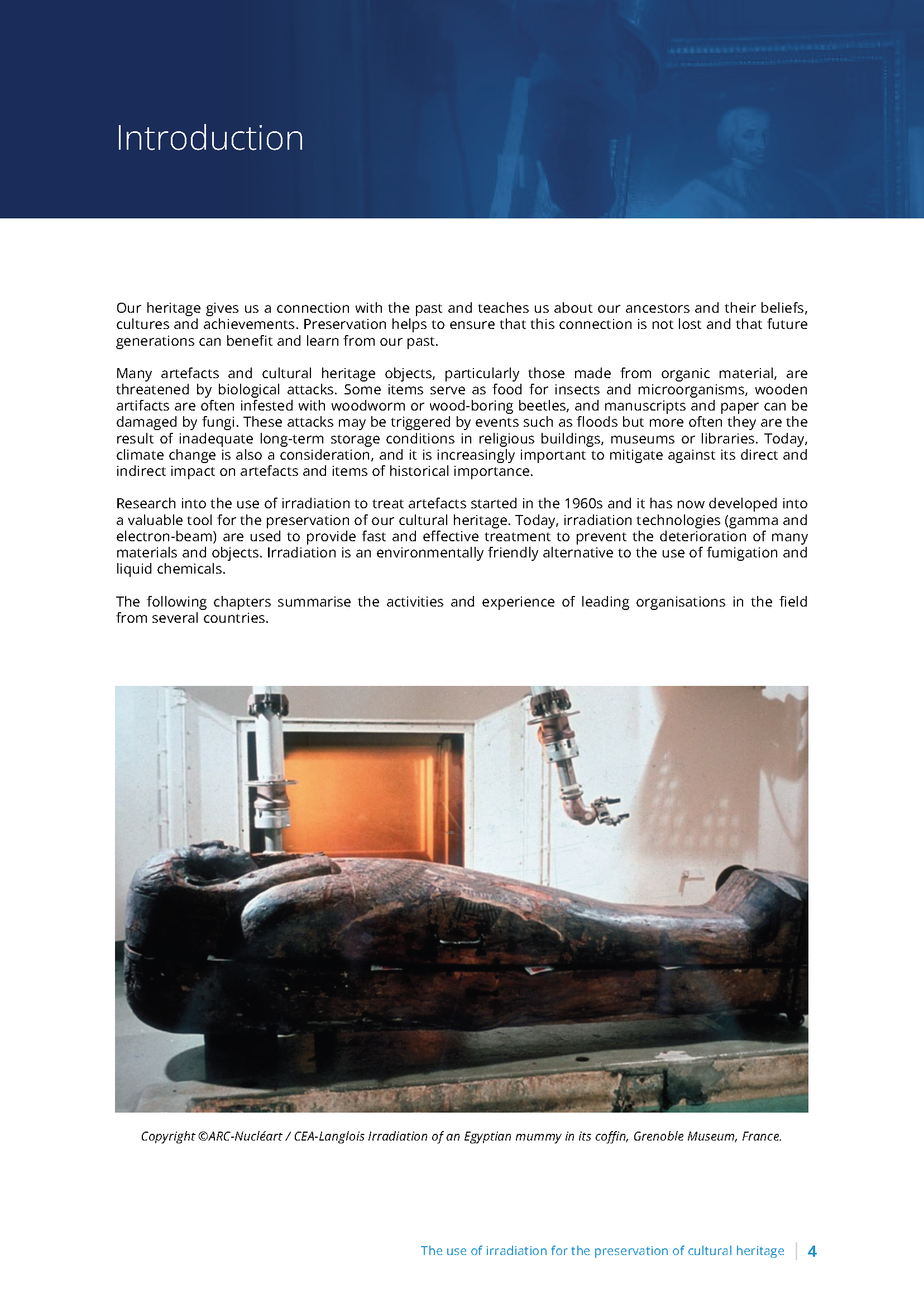
Research into the use of irradiation to treat artefacts started in the 1960s and it has now developed into a valuable tool for the preservation of our cultural heritage. Today, irradiation technologies are used to provide fast and effective treatment to prevent the deterioration of many materials and objects. Irradiation is an environmentally friendly alternative to the use of fumigation and liquid chemicals.
This publication summarises the activities and experience of leading organisations in the field from several countries.
Contributing organisations:
- IPEN, Brazil
- Ruđer Bošković Institute, Croatia
- ARC-Nucléart, France
- ENEA, Italy
- Horia Hulubei National Institute, Romania
- VINČA Institute of Nuclear Sciences, Serbia
- Turkish Energy, Nuclear and Mineral Research Agency, Türkiye